Table of contents
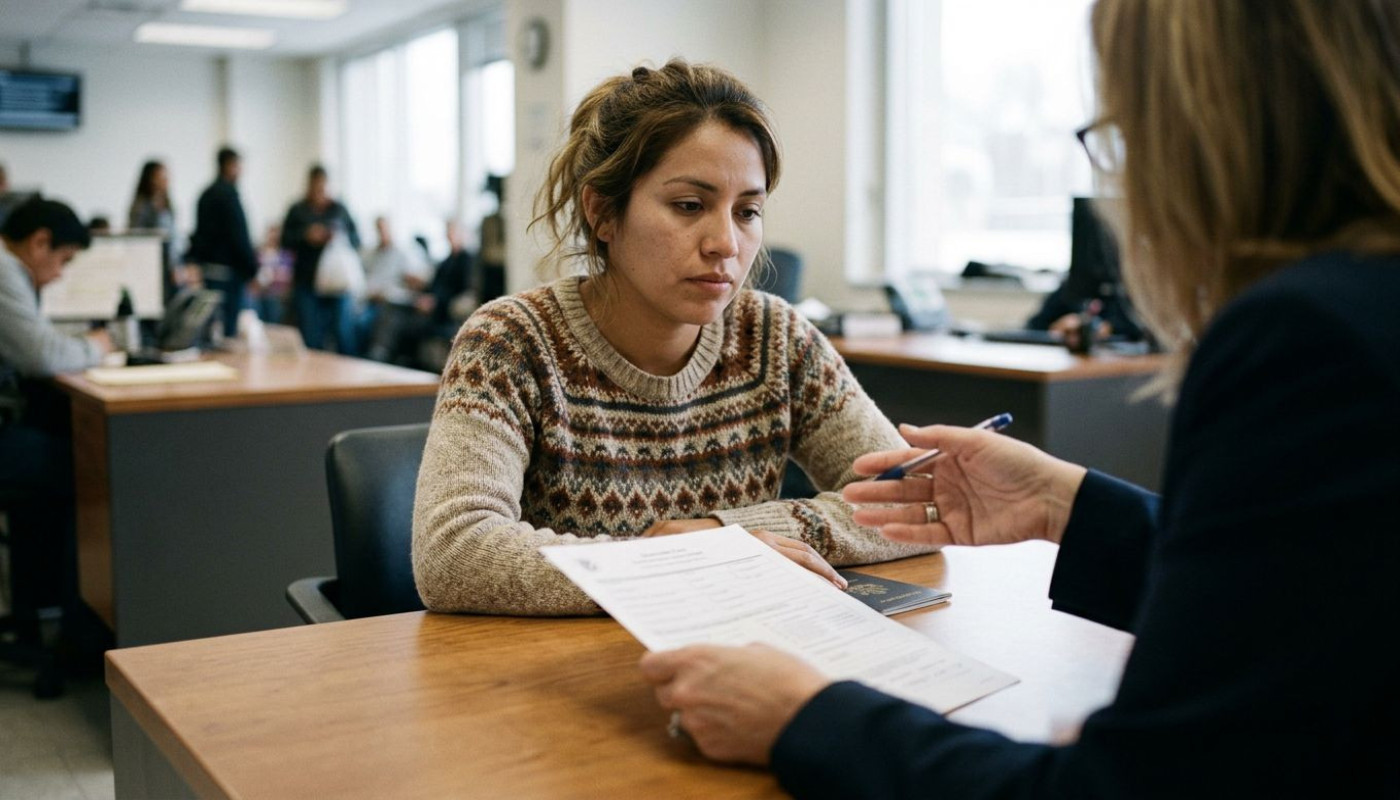
The first immigration interview is often treated as a personal milestone, a stressful appointment that determines whether a life plan can move forward, yet it also functions as a small, revealing window into a country’s political priorities. From the documents a caseworker asks for to the tone of risk screening, early-stage interviews can expose how states balance security, labor needs, and humanitarian commitments, especially as migration pressures and policy churn remain high across major destinations.
The questions that betray a country’s priorities
What is the officer really trying to learn? In most first interviews, the stated goal is administrative, verify identity, confirm the basis of the application, and spot inconsistencies, yet the pattern of questions, and the weight given to certain answers, often mirrors national policy choices more clearly than official speeches do. When an interview leans heavily on employment history, credential recognition, and language ability, it reflects a state that frames migration primarily as an economic input, and it tends to correlate with points-based selection systems, shortage-occupation lists, and tighter pathways for those outside formal labor demand. By contrast, when the interview foregrounds family ties, community support, and proof of relationship authenticity, it often signals a policy architecture built around reunification, with fraud prevention as a central political concern.
Even the sequencing matters. Interview protocols that begin with travel history, prior visa refusals, and biometrics-based verification communicate a security-first posture, and in many jurisdictions that posture hardened after the expansion of watchlists, data-sharing agreements, and interoperability between border systems. Meanwhile, interviews that spend more time clarifying protection claims, country-of-origin risks, and timelines of harm can indicate a system under pressure to meet non-refoulement obligations, or at least to demonstrate procedural fairness under judicial scrutiny. The interview room becomes a condensed version of policy: a place where the state decides which stories are legible, which documents count as truth, and which uncertainties are treated as risk rather than as the inevitable texture of displacement.
How risk checks shape the whole experience
Security is not just a background filter, it is often the main event. Over the past decade, many immigration systems have widened the scope of “admissibility” beyond obvious criminality, folding in broader notions of public order, misrepresentation, and even perceived intent, and that expansion shows up early, sometimes subtly, in first interviews. Applicants may encounter detailed questioning on social media identifiers, gaps in residence history, and prior names or spellings, not necessarily because the officer suspects wrongdoing, but because contemporary screening is designed to reduce uncertainty, and uncertainty itself is treated as a vulnerability in the system.
The mechanics of this are increasingly data-driven. Biometric enrollment, database cross-checks, and information-sharing between agencies can accelerate decisions for straightforward cases, yet they can also create new forms of friction, especially for people whose records are inconsistent across jurisdictions or whose documents were issued under unstable civil registries. A single discrepancy, a date that differs by one day, a transliteration that shifts between passports, can trigger a “pause” that feels personal but is in fact procedural. Policy debates about fraud, national security, and border integrity do not stay on parliamentary benches; they surface in interview scripts, and in the thresholds that determine when an applicant is routed into extended review. For the individual, the first interview becomes a test of narrative coherence under administrative pressure, and for the state it becomes a triage point, deciding which cases deserve speed, and which must absorb the cost of caution.
What fairness looks like under pressure
Is the process built for truth, or for throughput? First interviews sit at the intersection of two competing demands: the obligation to be fair and individualized, and the political imperative to move cases faster, reduce backlogs, and reassure publics that the system is “under control”. When caseloads swell, interviews can tilt toward checklists, templated questioning, and abbreviated opportunities to explain context, and that shift is not merely managerial. It changes outcomes, because credibility assessments often depend on nuance, and nuance is the first casualty of time pressure.
Fairness, in practice, is also shaped by who has access to counsel, interpreters, and stable documentation. A well-prepared applicant with representation may anticipate the evidentiary expectations, present a coherent file, and correct misunderstandings in real time, while a vulnerable applicant may struggle to translate trauma into chronological detail, or to explain why a birth certificate cannot be obtained from a collapsed local registry. The interview thus reveals the implicit assumptions of a national system: that records exist, that timelines are linear, and that truth can be proven on demand. Some states respond by building stronger procedural safeguards, clearer guidance, and more robust interpretation services; others respond by tightening documentary requirements and increasing penalties for inconsistency, betting that deterrence will reduce claims. The first interview, more than any policy memo, shows which bet a country is making.
Citizenship-by-investment, a policy signal too
Money talks, and immigration interviews can, in their own way, translate that language. While many applicants enter through work, family, or protection routes, a parallel universe has expanded in recent years: mobility tied to capital, whether through investor visas, residence-by-investment, or citizenship-by-investment models. These programs sit at the center of a global argument about fairness and sovereignty, because they can offer expedited pathways based on contribution, while standard routes remain slow, uncertain, and heavily scrutinized. The contrast is itself a national policy statement, and it shapes how societies understand who is welcomed, and on what terms.
In the Pacific, the Nauru Citizenship Program is part of that broader landscape, and it illustrates why first interviews, and the policies behind them, cannot be read only as individual hurdles. When states design channels that emphasize investment, due diligence becomes the political and operational centerpiece, and interviews or vetting steps focus less on integration narratives and more on source of funds, identity verification, and reputational risk. Proponents argue that such programs can generate public revenue and diversify national income, especially for small states with limited economic bases; critics counter that they can create loopholes if screening is weak, and they push for tighter transparency standards. Either way, the existence of an investment route sends a clear signal: national policy is not only about who needs protection or who fills jobs, it is also about how a country monetizes mobility, and how it manages the diplomatic and security implications of that choice.
Practical next steps before you book
Preparation is policy-proofing. Before scheduling a first immigration interview, applicants typically benefit from building a clean documentary timeline, checking that names and dates match across records, and budgeting for certified translations, notarizations, and, where relevant, legal advice, because small inconsistencies can become major delays once risk checks begin. Where programs involve investment, plan for due diligence costs, banking documentation, and longer lead times for compliance reviews, and always verify requirements through official channels or qualified counsel.
On the same subject

Interpol Red Notices: The Thin Line Between Law And Political Pressure
Behind The Scenes Of A High-profile Extradition Trial

Smart agriculture technology revolutionizing farming in the digital age
